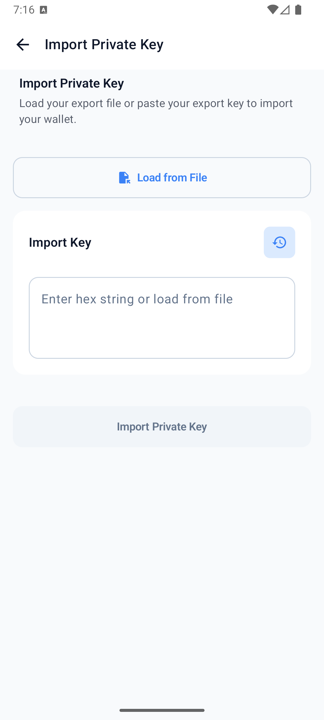
Import
Import takes a previously exported private key and runs an internal keygen that derives fresh shares for all parties from those raw key bytes. The output is a wallet with the same keyId, public key, and blockchain address as the original — but the on-disk share bytes are new.
For the SDK contract see Import Key (Kotlin) and Import Key (Swift).
How the example does it
- Android
- iOS / macOS
vault/.../session/VaultSessionManager.kt
suspend fun importKeyshare(privateKey: ByteArray, keyType: KeyType): KeyResult {
    val keyId = sessionFor(keyType).import(keysharePrivateKey = privateKey).getOrThrow()
    val publicKey = extractPublicKey(keyId)
    return KeyResult(keyId, publicKey)
}
Vault/Session/VaultSessionManager.swift
func importKeyshare(privateKey: Data, type: KeyType) async throws -> KeygenResult {
    let keyId = try await sessionForKeyType(type).`import`(keysharePrivateKey: privateKey).get()
    let publicKey = try await extractPublicKey(keyId: keyId)
    return KeygenResult(keyId: keyId, publicKey: publicKey)
}
Note: trio's import takes only privateKey (no rootChainCode parameter, unlike duo). The SDK auto-persists the new keyshare via the registered storage client.