Sign
Signing produces a threshold signature over a message hash using the device's keyshare and the server's keyshare. The full private key is never reconstructed — each party contributes its share to the MPC protocol and the resulting signature is valid on-chain.
For the SDK contract see Sign (Kotlin) and Sign (Swift).
How the example does it
- Android
- iOS / macOS
suspend fun sign(keyId: String, message: ByteArray, derivationPath: String): ByteArray {
    val dao = readDao(keyId)
    val signature = sessionFor(dao.keyType)
        .sign(keyId, message.toHex(), derivationPath)
        .getOrThrow()
    return signature
}
func sign(keyId: String, message: Data, derivationPath: String) async throws -> Data {
    let record = try loadRecord(keyId: keyId)
    let messageHex = message.map { String(format: "%02x", $0) }.joined()
    let sig = try await sessionForKeyType(record.keyType)
        .sign(keyId: keyId, message: messageHex, derivationPath: derivationPath).get()
    return sig
}
The example reads the record from encrypted storage via readDao(keyId) / loadRecord(keyId:), which returns the storage client's VaultReconcileStoreDao / VaultReconcileRecord wrapper — only to resolve the keyType for dispatch, not to load keyshare bytes (the SDK reads those itself, addressed by keyId). The keyType on that wrapper is how the example knows which session (ECDSA or EdDSA) to dispatch to.
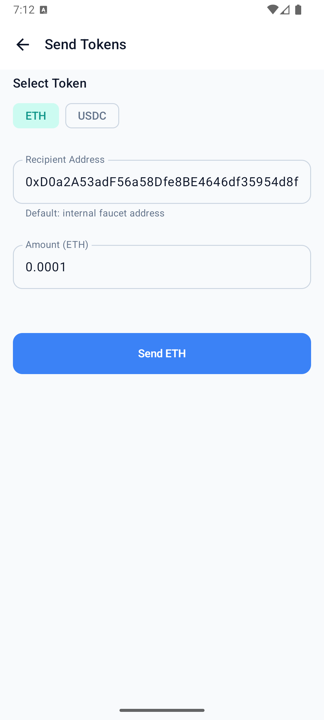
The message parameter is the transaction hash (hex-encoded). The derivationPath is "m" in this example (the root BIP-32 path). For child key derivation see BIP-32.